
Sports
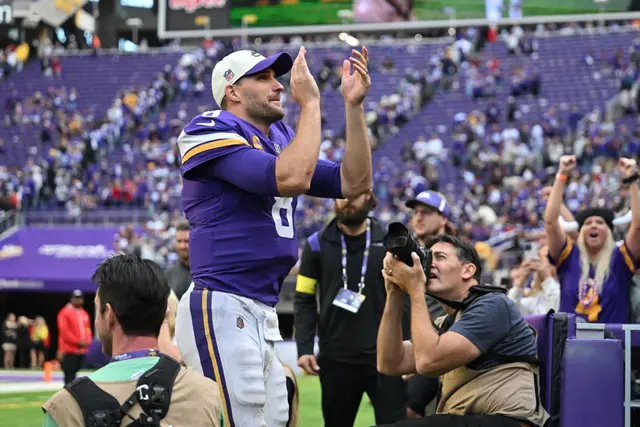
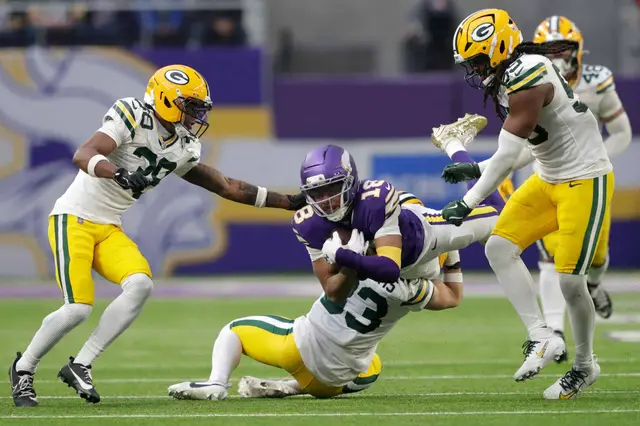
How Much Will the Vikings’ QB Change Matter To Green Bay?
By Katherine Langford
Advertisement · Why this ad?
Marcus manages the day-to-day editorial workflow across all brands, coordinating coverage assignments and ensuring editorial standards are met. He previously served as city editor at the Pioneer Press and holds a degree in Political Science from Carleton College.
More from Marcus →
Image courtesy of Daniel Dunn-Imagn Images By Jonah Maves - 1 hour ago Bones Hyland ’s NBA tenure has been tumultuous, to say the least. Hyland has found his way back into the NBA rotation with the Minnesota Timberwolves, but his impact is often hard to read. Spark plug, score-first bench point guards have varied influence on winning. It’s typical for the archetype. However, with Anthony Edwards sidelined , the Timberwolves have had to figure it out on the fly with Hyland. The sixth-year guard fits into the usage void well, but the fluctuations are unpredictable. Still, the season is in its early stages. It is far too early to overreact to ON/OFF and lineup data. Lineup data doesn’t balance out until mid-season, sometimes even later for bench players. Ultimately, through 11/12, Hyland has played just 135 minutes, yet his advanced stats are puzzling. Bones Hyland has such a unique profile to begin the season. Hyland has the team's worst ON/OFF rating of -19.8 (low-leverage minutes removed) and is the only player on the roster with a negative individual NET rating (-3.3). Still, Hyland has had the best start to the season of his career and is posting incredible individual impact metrics, making things even more confusing. As a result, we don’t know if Bones Hyland can drive winning. Some of Hyland’s ON/OFF data can be a testament to Minnesota's early-season success. The Timberwolves are among the league's best in point differential, and naturally their starting five leads them in that stat. However, most of it comes down to Hyland’s lack of balance between his offensive output and defensive impact. Minnesota’s offense has been 2.1 points per 100 possessions better when Hyland has been on the floor. However, the defense allows 21.9 points per 100 possessions more when Hyland is on the floor. It’s a hard question to answer considering the context of his lineups. As a bench player, Hyland already spends most of his minutes with different lineups. There’s not much consistency, and there aren't many starters alongside him when he's on the floor. Hyland can operate with more freedom when starters such as LaMelo Ball and Jaden McDaniels sit during his minutes. However, it pushes Hyland past his limits and ultimately forces him to play more consistently. The easy adjustment would be to allow Hyland to stagger with starters. However, in Hyland’s two-man lineup alongside starters Rudy Gobert , Jonathan Kuminga , and Jaden McDaniels, the minutes have been negative, and the defensive rating has been abysmal. Alongside McDaniels, the duo has had a NET rating of -18.9 and DRTG of 121.8. With Kuminga, the duo has had a NET rating of -14.3 and DRTG of 131.9. In lineups with Gobert, the pair has a NET rating of -14.9 and DRTG of 123.6. Hyland’s top five most used 5-man lineups have only around 10 minutes of on-court time this season, but they are all positive. He has great two-man lineup data with Trey Lyles and Joan Beringer . Even in Hyland’s positive lineups alongside Beringer and Lyles, there are defensive concerns. They are league average in the Hyland-Lyles pairing, and -1.7 points worse than league average with the Hyland-Beringer duo. If Hyland can't solve his defensive woes, he’ll struggle to find minutes once Anthony Edwards and possibly Donte DiVincenzo return from injury. Still, Hyland is having one of the best seasons of his career by individual metrics. According to Basketball Reference, through 11 games played, Hyland has a career-high box-plus-minus (BPM) of 7.1 and an offensive box-plus-minus of 4.1. Basketball Reference refers to BPM as a metric that relies exclusively on standard box score stats (like rebounds, assists, and shooting percentages), a player's position, and overall team performance. That’s showcased through Hyland’s assist and turnover rates. Hyland’s usage is at a career-high 31%, which ranks in the 98th percentile for his position. His assist rate (36.1%, 95th percentile) and turnover rate (8.8%, 90th percentile) are as well. The usage percentage ultimately showcases that Hyland has a massive impact on Minnesota's offensive outcomes. Therefore, the offense is not an issue. The only way for the Timberwolves to work through Hyland’s early-season volatility is to give him more minutes and build a larger sample. Data models that can showcase increased minutes, ON/OFFs, past-season results, and the eye test can predict how Hyland’s defense will hold up. The key is that the Timberwolves don’t need Hyland to be a defensive stopper. All Chris Finch and the Timberwolves need from Hyland is an offensive spark plug and a league-average defense when he is on the court. Hyland’s early-season data is confusing, but his route to sustained impact will remain simple. By Jonah Maves Think you could write a story like this? Hockey Wilderness wants you to develop your voice, find an audience, and we'll pay you to do it. Just fill out this form . minnesota timberwolves nba bones hyland
By Katherine Langford
By Katherine Langford

By Katherine Langford
By Marcus Chen